Why We Backed Seltz: Rebuilding Search for the Agentic Web
June 24th, 2026
Search is changing. It is now being built for agents.
The web was designed for humans. Pages were written to be read, search engines were designed to surface links, and the retrieval stack has long assumed a person sitting behind a browser deciding what to click. That assumption no longer holds.
AI agents do not navigate the web like humans. They parse, extract, compare, and retrieve structured information across many queries in rapid sequence. Every millisecond of latency compounds. Every misparsed snippet can propagate downstream. Every dependency on a ranking system built for human clicks introduces a layer of fragility.
This is the gap Seltz was built to close, and it is why we are proud to have joined the company’s $12.5M Seed round.
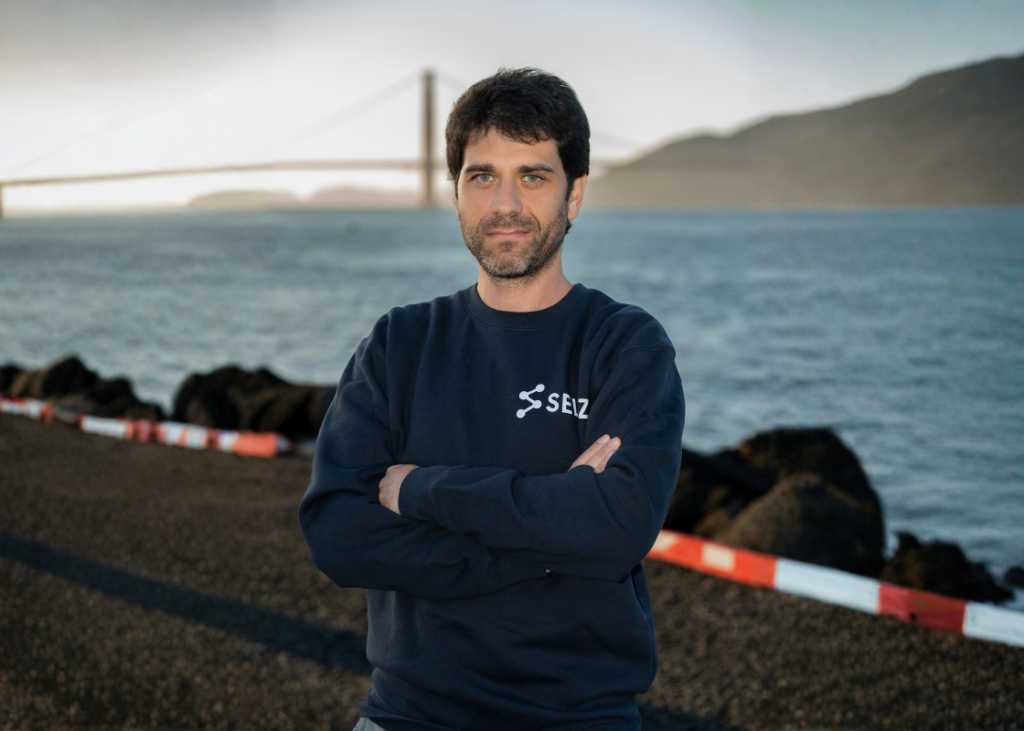
Founded by Antonio Mallia, Seltz is rebuilding the web retrieval stack from first principles for AI agents and large language models. The round is led by Speedinvest and B Capital, with United Ventures joining alongside futurepresent, Italian Founders Fund, arc Investors, Vento Ventures, Mango Capital, 2100 Ventures, and Future Back Ventures.
Most “AI search” products on the market today are wrappers. They sit atop Google, Bing, or Brave, taking results designed for human consumption and reformatting them for agents. This may work at small scale. It becomes fragile as agents move into production.
Latency compounds across multi-step retrieval. Costs scale linearly with API calls. Results carry the ranking biases of consumer search. And the wrapper layer cannot make architectural choices the underlying engine refuses to allow.
Seltz chose the harder path.
Antonio and the team made the deliberate decision to build everything from scratch, owning and operating the full retrieval stack: crawling, knowledge extraction, indexing, retrieval, and ranking. Instead of returning a ranked list of links that an agent then has to interpret, Seltz gives agents what they actually need: fresh, citable, structured information delivered in milliseconds.
The early results suggest how much this architectural choice matters. Seltz’s first public benchmark, the Dynamic News Search Benchmark, places the company at industry-leading levels of both accuracy and speed, with 89% retrieval accuracy at 166 milliseconds end-to-end. Six months after the public release of its API, developer sign-ups have grown roughly sixfold, and the company has indexed more than 500 million web pages with effectively no marketing budget.
What makes Seltz defensible is the choice to own the stack. In a market where most competitors depend on third-party search results they cannot control, Seltz can make architectural decisions and capture value across the entire pipeline. As agents move closer to production, those decisions matter more. They also become harder to replicate from a wrapper.
Antonio has written about this choice in his own words, and his piece is the clearest articulation of the architectural argument behind Seltz. The short version is simple: an agent querying a Google wrapper receives the same documents Google would have surfaced anyway, ranked for human clicks rather than for the agent’s task. Genuine independence requires owning the index. Owning the index makes everything downstream possible.
A founder built for this problem
Antonio Mallia is one of the most credible builders we have met in the field of information retrieval.
He holds a PhD in Computer Science from NYU, where he focused on large-scale web search and the efficiency of information retrieval. He is the lead author of PISA, one of the fastest academic search engines ever built, and has spent the last decade running search infrastructure at Bloomberg, on Amazon’s AGI team, and at Pinecone.
His work has been presented at the field’s leading international conferences, and he has built a reputation in the information retrieval community as one of the few researchers who can move fluently between academic rigor and production systems at scale.
That dual fluency is rare. It is exactly what an undertaking like Seltz requires.
Antonio has also surrounded the company with a community of advisors and angel investors drawn from the same intersection: leading academic researchers in information retrieval, and senior operators at some of the most important AI infrastructure companies in the world.
There is also a quieter Italian thread running through the story.
Antonio’s training in information retrieval began at the University of Pisa, before his PhD at NYU. Pisa is a small city with an unusually deep research tradition in search and information retrieval, and that ecosystem helped shape the technical foundation Antonio is now bringing to Seltz.
He moved to the United States to build at the frontier of AI infrastructure, and is now building one of the most ambitious AI infrastructure companies from San Francisco. At the same time, Seltz maintains meaningful technical roots in Europe and Italy, with a team working across San Francisco, New York, Los Angeles, Paris, Pisa, Berlin, and Leipzig.
For us, that combination matters: an Italian researcher building at the center of the AI infrastructure market, while keeping research and engineering capacity connected to the community that trained him.
What the round enables
The $12.5M round will support Seltz as it expands its crawling and indexing infrastructure, grows its engineering and research team, and accelerates go-to-market with frontier AI labs, AI-native startups, and enterprise customers operating in domains where retrieval accuracy has real consequences.
As agents become primary consumers of the web, the infrastructure they retrieve through has to be rebuilt for them.
Seltz is doing exactly that.
We are proud to be working alongside Antonio and the entire Seltz team, together with investors and advisors who understand both the technical depth and the commercial trajectory of what is being built here.