Smartness, and the End of Software as a Tool
May 4th, 2026
Why we led a €47M Series B in the company building the first Agentic System for European hospitality
The hospitality technology stack of the last fifteen years was built on a quiet bargain. Independent hotels gained global distribution through online travel agencies and, in exchange, surrendered between 15% and 25% of every gross booking — a margin transfer that, compounded across a fragmented continent of small operators, has reshaped the industry’s economics. Booking visibility came at the cost of pricing autonomy, direct customer relationships, and, ultimately, a structural dependency on intermediaries whose interests rarely align with the long-term sustainability of independent properties.
That bargain is now coming undone, and the instrument of its undoing is software that no longer behaves like a tool.
United Ventures and CDP Venture Capital have led a €47 million Series B round in Smartness — including primary, secondary, and a debt component — alongside existing investor Partech, which led the Series A at the end of 2023. Based on available market data, this is the largest round ever closed in Italy for a vertical SaaS company, bringing Smartness’s total capital raised past €60 million. Roughly half of the proceeds will fund M&A, with the company already in advanced negotiations on its next acquisition, while the remainder will accelerate hiring and international scaling across the DACH region and beyond.
From software tools to operational systems
The thesis behind our investment rests on a category shift that is reshaping vertical SaaS as a whole. For three decades, business software has lived inside a clear functional perimeter: it presented information, structured workflows, and waited for a human to act. The customer paid for tools; the customer remained accountable for results. AI is now collapsing that perimeter. The next generation of vertical platforms does not stop at decision support — it executes operational tasks on behalf of the customer, taking direct responsibility for outcomes. We refer to this category as agentic systems, and we believe it represents one of the most consequential shifts in enterprise software since the move from on-premise to cloud.
Hospitality is a particularly fertile substrate for this transition. The European market is structurally fragmented — independent properties account for roughly 60% of supply — and chronically under-digitized, with many operators still relying on manual processes for pricing, distribution, and guest communication. The operational surface area is enormous, the labor intensity is real, and the gap between what enterprise chains can afford and what a small independent hotelier can deploy has only widened. This is the gap an agentic platform can close at scale, and it is precisely the gap Smartness has been engineering toward since 2020.
A founding team that knows the industry from the inside
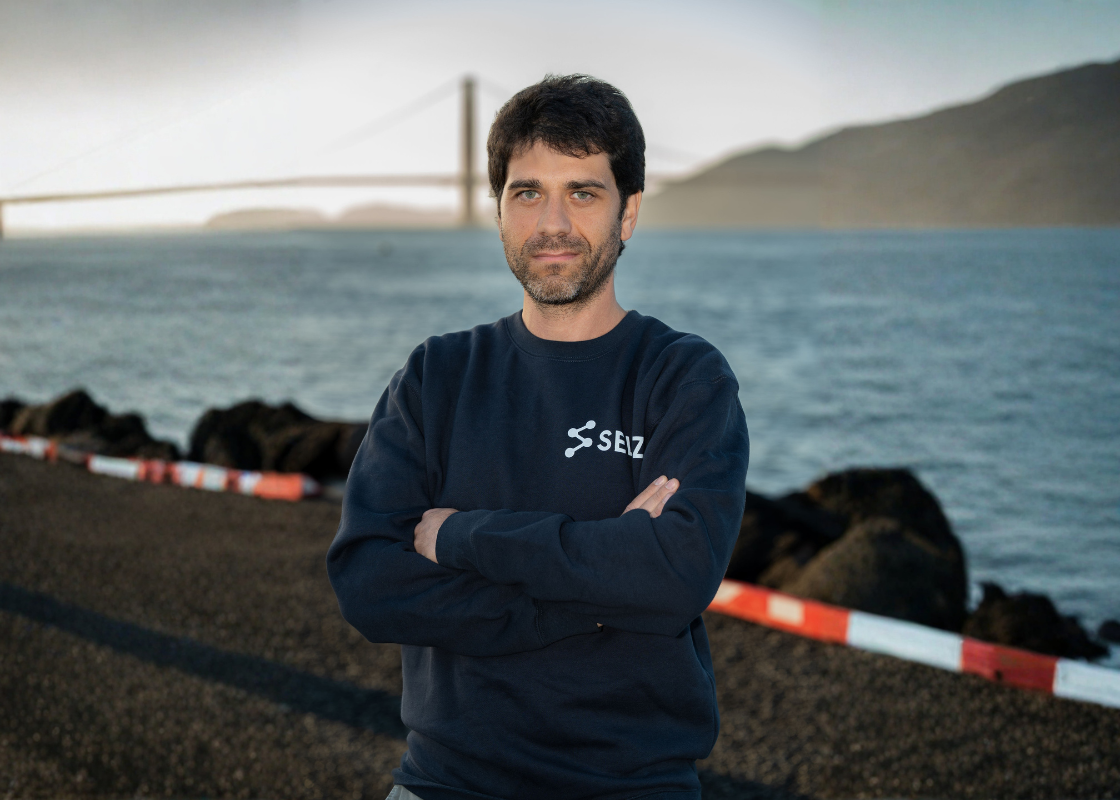
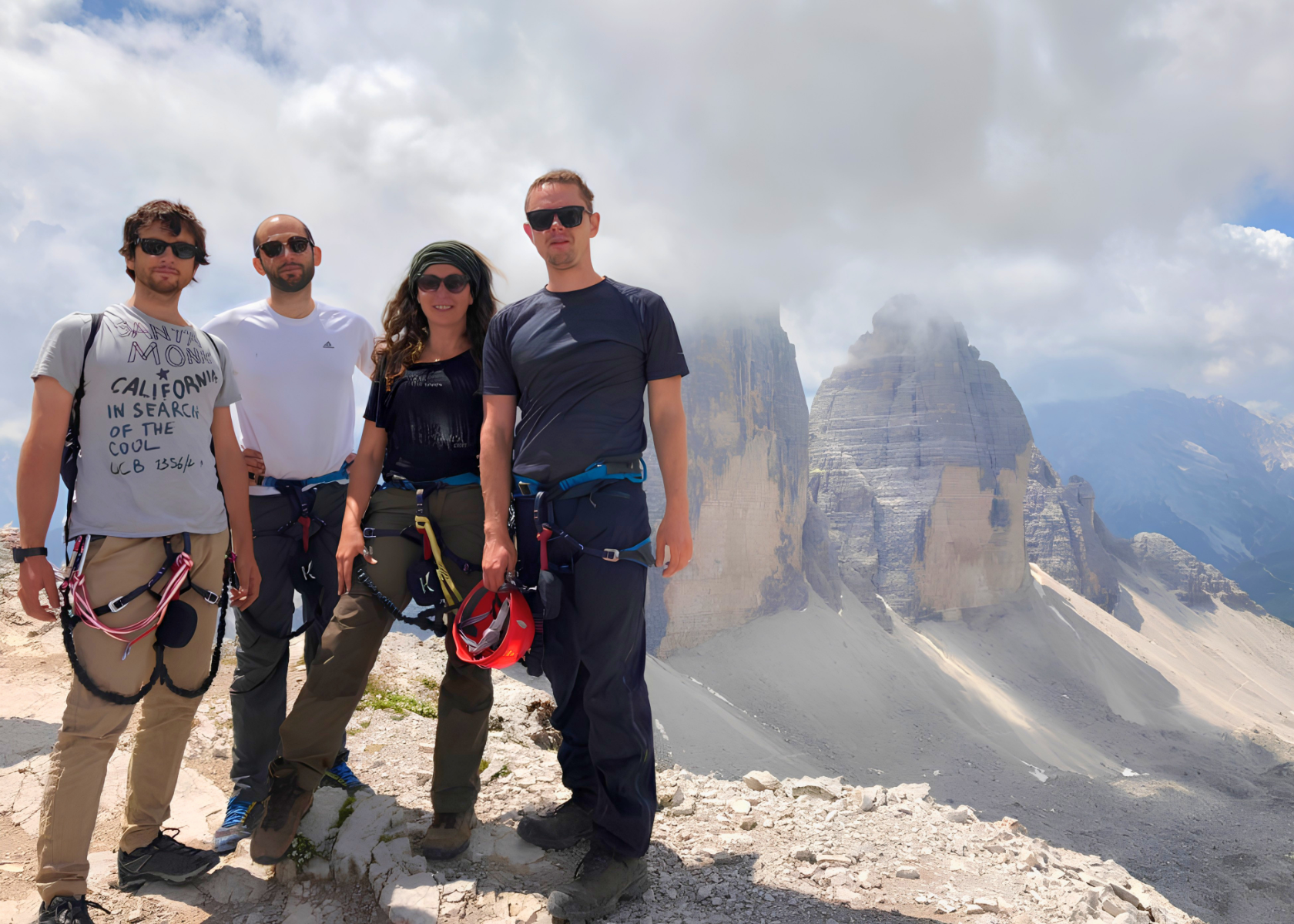
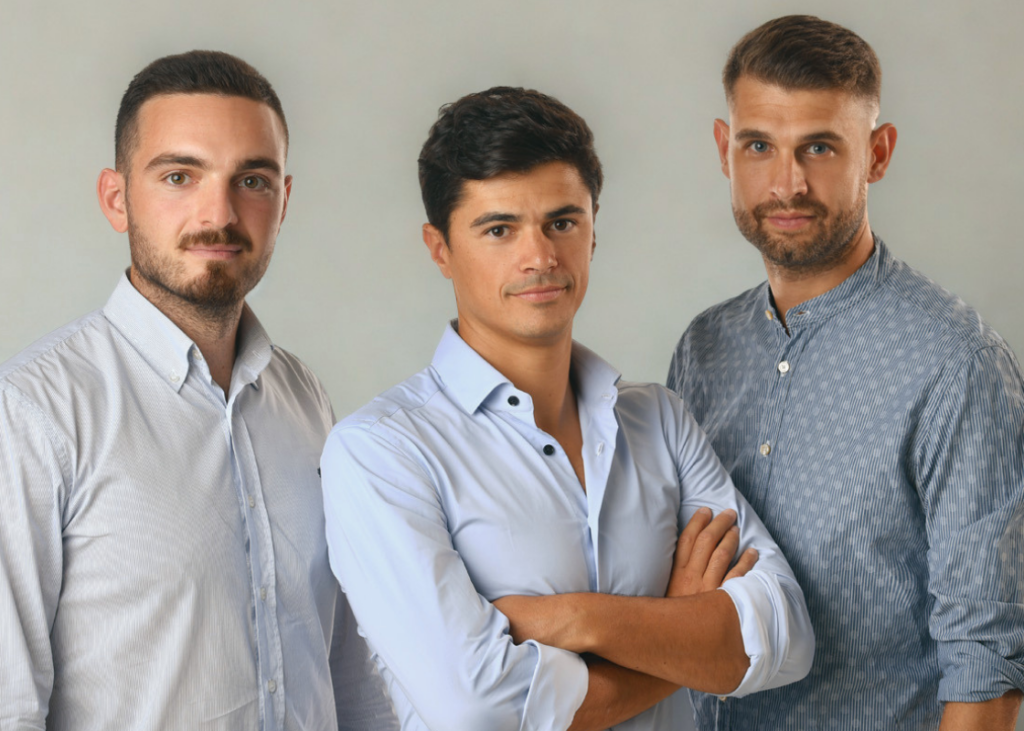
We do not invest in categories. We invest in founders, and the conviction we have in Smartness is, before anything else, conviction in its founding team. Luca Rodella, CEO, is a serial entrepreneur in travel-tech with a decade of ventures inside the hospitality sector — the kind of operator whose product intuitions are calibrated by years of conversations with hoteliers, not by market reports. Eugenio Bancaro, CPTO, brings deep software engineering expertise honed across Silicon Valley and a portfolio of technical projects that long predates Smartness. Tommaso Centonze, COO, joined from Google in Dublin with a background in international business development and a CEMS-tracked formation that maps directly onto the company’s go-to-market geography.
This combination — direct sector knowledge, technical depth, commercial discipline — is the structural reason a company founded in Trentino has been able to build, in five years, what Smartness has built. Starting from a single product, Smartpricing, the team has expanded into a modular platform that now spans property management, guest communication, CRM and upselling, and payments — solutions that work both as standalone modules and as an integrated end-to-end suite. The architecture matters: it lets the company land with one product and expand into the full operational stack, which is exactly what the data shows is happening.
The numbers behind the conviction
The commercial trajectory has been one of the most compelling we have observed in European vertical SaaS. Smartness today serves more than 5,000 customers across 41 countries, with a particularly strong footprint in Italy and the DACH region. Since Partech’s Series A, revenue has grown more than 6x, while organic growth — excluding any contribution from M&A — has been sustained at approximately 10% month over month. Among the leading global SaaS players in lodging, Smartness has been among the fastest, if not the fastest, to reach and clearly surpass €10 million in revenue — a benchmark that, in our view, places it on a credible path to €100 million ARR and beyond.
Consolidation as a deliberate strategy
European vertical SaaS, in hospitality and elsewhere, is reaching the phase of the cycle in which fragmentation becomes the dominant structural feature of the market — a long tail of regional point solutions, each strong in its niche, none with the resources to build the agentic stack the next decade will require. Our conviction is that the European leader in hospitality technology will not be built purely organically. It will be built by an operator capable of combining product velocity with disciplined M&A execution. Smartness has already completed several acquisitions and is now in advanced negotiations on the next, with roughly half of this round earmarked for inorganic growth. The 2026 target — tripling revenue through organic and inorganic levers combined — is ambitious, and the operational discipline we have observed in the team makes us believe it is achievable.
The European angle
There is, finally, a structural point worth making about geography. Italian vertical SaaS has historically suffered from a perceived ceiling: companies that build deep domain expertise in a single national market and never quite cross into continental scale. Smartness inverts this pattern. The DACH region already accounts for a meaningful share of revenue, the product roadmap is built natively for international deployment, and the team’s ambition — explicitly articulated by Rodella — is to become the first global AI technology provider for hotels and non-hotel accommodations. The Italian innovation ecosystem needs more companies that start in a regional market and become continental category leaders. We believe Smartness has the founding team, the product architecture, the financial discipline, and now the capital base to be one of them.
The shift from software tools to operational systems is one of the defining technological waves of this cycle. Smartness is among the few European companies positioned to ride it from the front. We are proud to lead this round and look forward to supporting Luca, Eugenio, Tommaso, and the entire team as they build, from Rovereto outward, what we believe can become a global category leader.