Building the Data Foundation for Physical AI. Why We Invested in Mosaico
November 16th, 2026

The next leap in physical AI depends on making sense of the data machines already collect.
Vehicles, robots and connected industrial systems record the world through cameras, positioning systems and other sensors. Those recordings hold the information engineers need to train models, investigate failures and improve how machines behave. Yet finding and preparing the right data can still take hours of manual work.
As AI moves further into physical environments, this becomes a constraint on how quickly it can develop. Every improvement depends on a team’s ability to understand what happened in the real world and turn that experience into something a system can learn from.
Mosaico is building the infrastructure to make that process easier. We are leading its €7.5 million seed round, alongside OpenOcean and returning investor Connect Ventures, because we believe that managing physical-world data is a foundational opportunity in the next phase of AI.
From collecting data to learning from it
Consider an autonomous vehicle approaching a crosswalk. To understand its behavior, an engineer may need to examine camera footage alongside positioning and motion data, then find similar situations across thousands of other journeys.
The information exists, but it is spread across recordings, formats, and sensor streams. Before useful development work can begin, someone has to retrieve it and put it together. Robotics teams often end up building and maintaining their own infrastructure to do this, committing scarce engineering time to a problem shared across the industry.
As data volume grows, so does the cost of that fragmentation. Collecting more information only creates value if teams can use it to answer better questions.
This is where we see the opportunity for Mosaico: a common data foundation that allows engineers to move more easily from a recorded event to an insight, and from that insight to a better system.
A focused product with broad relevance
Mosaico’s open-source platform organizes sensor data into searchable, training-ready assets. It fits into existing engineering workflows and helps teams retrieve the information they need without first building an entire data infrastructure themselves.
An engineer looking for a particular driving scenario can query a much larger collection of recordings and retrieve the relevant clips. That makes it easier to assemble data for training, investigate specific behavior, and validate how a system performs.
We are drawn to the founders’ decision to concentrate on this shared problem. The data layer requires deep technical expertise, and its usefulness extends across many applications. Robotics provides a clear starting point, while IoT, agritech, and smart city technologies face related challenges in making sensor data usable.
Our investment thesis rests on that combination of focus and breadth. Solving a specific engineering problem well can create infrastructure that many teams can build on.
Founders who know the problem firsthand
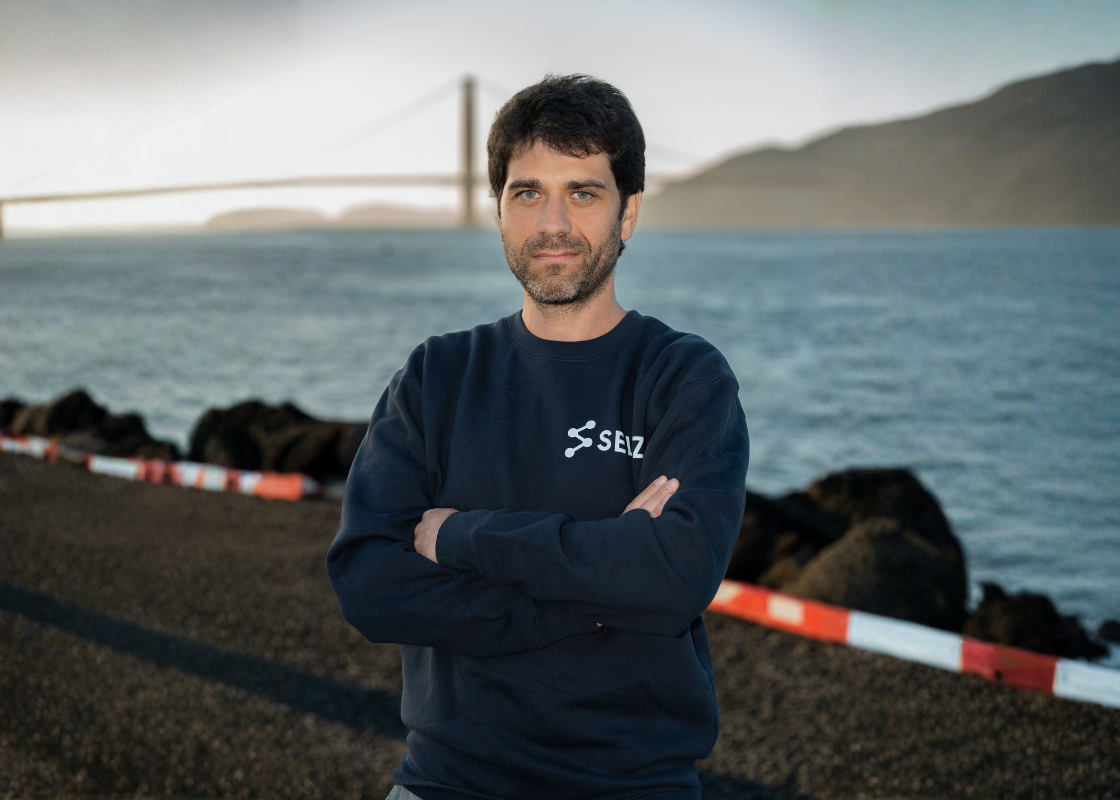
Gabriele Lini, Francesco Di Corato and Federico Cabassi bring together experience in autonomous driving, robotics research and automotive engineering. Through their work on autonomous vehicle systems at Ambarella, they encountered the practical difficulty of managing sensor data throughout the development process.
That experience matters because infrastructure is shaped by countless decisions about what engineers need, what can be simplified, and where flexibility must be preserved. The founders understand the workflows their product has to support and the frustration of spending time preparing data before they can begin working with it.
Their response was to focus Mosaico on the underlying data layer. We see that choice as an expression of both technical judgment and ambition: address a problem they know deeply, then build a foundation that others can use.
Open infrastructure, built for adoption
Mosaico combines an open-source core with deployment on a company’s own servers, cloud account, or edge hardware. Teams can work with a shared foundation while retaining control over their data and infrastructure.
For us, open source is an important part of how a platform like this earns adoption. Engineers can evaluate it against their own requirements, integrate it into their workflows, and contribute experience from different environments. That creates a close connection between the people building the infrastructure and those relying on it.
Mosaico’s community has grown to more than 1,200 members since December 2025, including engineers and researchers at Google DeepMind, Amazon, ETH Zürich, and Politecnico di Milano. We see that engagement as an encouraging early signal of the problem’s relevance and the team’s ability to reach the people working on it.
The opportunity ahead is to turn that engagement into a widely adopted foundation for physical-world data.
The infrastructure behind the next wave
At United Ventures, we look for enabling technologies that help new capabilities become useful at scale. Physical AI makes that perspective particularly relevant: progress depends on the systems that connect advances in models with the complexity of the environments in which machines operate.
Data infrastructure is one of those systems. Making sensor data easier to find and use can help teams learn faster from what their machines encounter, with benefits across development, testing and deployment.
Mosaico’s ambition is to make that capability available to a much wider engineering community. We are backing Gabriele, Francesco and Federico because they understand the problem firsthand and have chosen to build at a layer on which many others will depend.
Mosaico is hiring. If you’d like to help build the open-source infrastructure behind physical AI, explore the team’s open roles.
Read more on Sifted 🗞️ Exclusive: Italian robotics startup Mosaico raises €7.5m to tackle AI’s data problem